

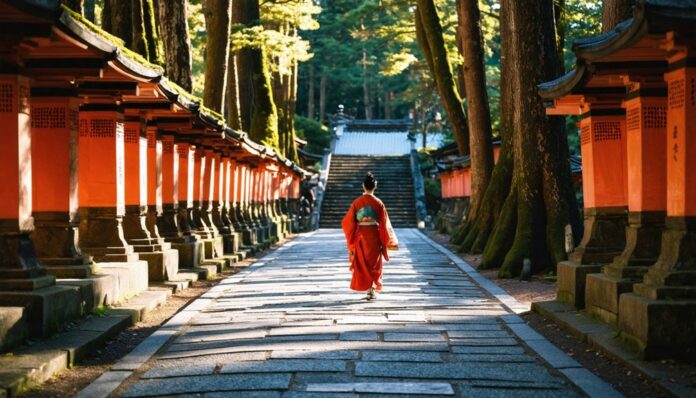

Cultural travel rewards those who choose destinations wisely. Not every historic city or scenic landscape delivers genuine immersion. The difference lies in how tradition, architecture, food, and community intersect within a place. Some destinations achieve this intersection authentically. Others merely perform it for visitors. Singapore, Bali, Angkor, and Seoul each represent distinct cultural profiles worth examining closely—each one carrying surprises that conventional travel guides rarely capture.
Key Takeaways
- Singapore blends futuristic urban design with UNESCO-recognized hawker culture, offering multicultural culinary districts preserving generational food traditions across Chinatown, Little India, and Kampong Glam.
- Bali’s art villages like Celuk and Batuan offer hands-on workshops in silversmithing, batik painting, and woodcarving rooted in generational apprenticeships.
- Siem Reap’s Angkor Archaeological Park combines 400 square kilometers of Khmer heritage with Apsara dance, cooking classes, and community-guided storytelling experiences.
- Seoul, Prague, and Edinburgh each preserve distinct historical layers through adaptive architectural reuse, medieval storytelling traditions, and UNESCO-recognized heritage sites.
- Authentic cultural destinations prioritize local community engagement, sustainable visitor management, and organic experiences rather than commercialized, curated performances characteristic of tourist traps.
What Separates a Great Cultural Destination From a Tourist Trap
The distinction between a genuine cultural destination and a tourist trap often comes down to authenticity — whether a place is rooted in real historical significance and living cultural heritage, or engineered primarily for commercial extraction.
Authentic destinations reflect preservation ethics through sustainable visitor management, fair economic models that benefit local communities, and transparent value exchanges devoid of aggressive commercialism. Travelers encounter community rituals organically rather than choreographed performances staged for outsider consumption.
Tourist traps, conversely, prioritize revenue over integrity — overcrowding sites, inflating prices, and replacing genuine culture with curated replicas. Credibility markers distinguish both: authentic destinations earn reputations through local endorsements and organic word-of-mouth, while manufactured experiences rely on manufactured hype.
The meaningful difference lies in whether locals genuinely inhabit and celebrate their culture, or simply perform it. Places like Las Ramblas and Sorrento are widely cited as standout tourist traps precisely because their commercial orientation has displaced the authentic local atmosphere that once defined them.
Singapore: Where Futuristic Architecture Meets Cultural Street Food
Singapore occupies a rare position among global cities, simultaneously embodying cutting-edge urban design and a street food culture so deeply rooted that UNESCO granted its hawker tradition Intangible Cultural Heritage status in 2020.
This hawker heritage extends beyond cuisine, functioning as a social institution where strangers share tables across economic and ethnic boundaries. Neighborhood rituals unfold across Chinatown, Little India, and Kampong Glam, each district preserving distinct culinary identities through generations of family-run stalls.
Hainanese chicken rice, laksa, and Murtabak represent multicultural influences that coexist authentically within single hawker centers.
Guided cultural tours connect these districts through structured five-hour experiences, offering visitors direct access to food preparation, cultural landmarks, and communities that collectively define Singapore’s identity as a destination where heritage remains genuinely lived rather than performed. At Maxwell Food Centre, Tian Tian Hainanese Chicken Rice draws consistent crowds for its tender chicken, seasoned rice, and punchy chilli, available for around five Singapore dollars.
Bali’s Cultural Scene: Temples, Art, and Hands-On Craft Workshops
Across Bali, a living tradition of artistic craft has been sustained through extended family structures spanning three generations, with the youngest learning directly from elders skilled in woodcarving, stone cutting, jewelry making, batik fabric dyeing, weaving, and basketry. Artisan apprenticeships remain central to preserving these practices, with master carvers producing elaborate works depicting gods and mythical creatures for temples and Balinese ceremonies.
Visitors seeking deeper engagement find hands-on workshops throughout Seminyak and Ubud, covering batik painting, silver jewelry design, clay modeling, and wood carving. Dedicated art villages extend these opportunities further. Celuk Village specializes in silversmithing classes, while Batuan’s Painting and Sculpting School introduces both traditional painting and stone carving. Together, these experiences offer meaningful participation in Bali’s enduring artistic identity.
Ubud, whose name derives from the Balinese word ubad meaning medicine, has served as Bali’s cultural and artistic hub for over a century, drawing artists and art lovers from around the globe to its galleries, festivals, and workshops.
Siem Reap and the Ancient Wonders of Angkor Wat
Shifting from Bali’s living craft traditions, Southeast Asia offers another profound cultural encounter in Siem Reap, Cambodia, where history operates on an entirely different scale. The Angkor Archaeological Park, a UNESCO World Heritage Site spanning 400 square kilometers, anchors the region’s cultural identity. Community guides lead visitors through Angkor Wat, Bayon Temple, and Ta Prohm, weaving local storytelling into each site’s architectural meaning.
Temple conservation efforts and ongoing restoration techniques preserve these Khmer Empire remnants for future generations. Beyond the temples, travelers engage with Apsara dance performances, Khmer cooking classes, and Phare Circus, founded by Khmer Rouge refugees. Rural cycling tours and traditional markets further reveal authentic Cambodian daily life, making Siem Reap a destination where ancient civilization remains genuinely accessible. The Old Market, Psar Chas offers visitors an immersive local shopping experience filled with spices, textiles, jewelry, and traditional Khmer snacks alongside opportunities to practice bargaining.
Seoul’s Cultural Contrast: Ancient Palaces and Modern City Life
From the ancient temples of Cambodia, Seoul presents an equally compelling but distinctly different cultural landscape, where five royal palaces built during the Joseon Dynasty stand in direct juxtaposition to contemporary glass architecture.
Gyeongbokgung, constructed in 1395, anchors the city’s historical identity while skyline temples and Buddhist sanctuaries remain seamlessly integrated throughout the urban fabric.
Changdeokgung, a UNESCO World Heritage Site since 1997, exemplifies Confucian design principles emphasizing harmony and hierarchy.
Modern structures like Seoul City Hall’s 2012 glass addition rise adjacent to these palace park grounds, creating deliberate architectural dialogue across centuries.
Former historical sites now serve progressive cultural purposes, including a converted women’s history museum, demonstrating Seoul’s commitment to preserving complex social narratives alongside its royal heritage. Seoul’s cultural landscape extends well beyond the capital, with destinations like Andong and Gyeongju offering visitors deeper immersion into South Korean culture and war history respectively.
Edinburgh, Prague, and Ephesus: Europe’s Cultural Heavyweights
Europe consistently offers some of the world’s most compelling cultural destinations, with Edinburgh, Prague, and Ephesus representing three distinct yet equally significant examples of heritage preservation across different historical periods and geographic contexts.
Edinburgh’s medieval storytelling traditions animate its stunning architecture and vibrant festival calendar, connecting visitors to Scotland’s layered identity.
Prague’s bohemian allure preserves fairytale structures shaped by centuries of urban folklore and artistic expression.
Ephesus reveals Roman opulence through sacred landscapes and archaeological monuments that once anchored ancient maritime trade networks across the Mediterranean.
All three cities maintain UNESCO-recognized heritage sites, museums, and cultural institutions that sustain intergenerational knowledge transmission.
Their collective preservation efforts demonstrate how distinct civilizations—ancient, medieval, and early modern—continue shaping contemporary cultural tourism across Europe. Ephesus itself sits within Turkey, a country whose broader cultural landscape includes Topkapi Palace, Blue Mosque and Hagia Sophia, reflecting the layered imperial legacies that have long defined the region’s historical identity.
Rio De Janeiro: Beaches, Carnaval, and Iconic Cultural Landmarks
Rio de Janeiro stands among South America’s most culturally layered destinations, where natural geography, colonial history, and living artistic traditions converge across a single metropolitan landscape.
Cristo Redentor, assembled in 1931 atop Corcovado Hill at 709 meters, welcomes over 2 million annual visitors. Copacabana and Ipanema beaches carry national heritage protection, reflecting Rio’s distinctive urban-coastal identity.
The Escadaria Selarón’s 125-meter mosaic stairway connects Lapa to Santa Teresa, neighborhoods preserving colonial Portuguese architectural traditions. Pedra do Sal, birthplace of samba, anchors Brazilian black cultural memory dating to the nineteenth century.
Samba workshops and favela tours offer visitors direct engagement with living communities. Tijuca National Park and the 1808 Botanical Gardens complete a destination where culture and landscape remain inseparable.
Sugarloaf Mountain’s cable car system, inaugurated in 1912, carries approximately 1.5 million visitors per year through two ascending lines to sweeping panoramic viewpoints above Guanabara Bay.
Adventure Seeker, History Buff, or Foodie: Find Your Destination
Whether a traveler prioritizes adrenaline, antiquity, or cuisine shapes which destinations reward the investment most directly.
Adventure seekers gravitate toward Bali’s dive sites and WWII shipwrecks or the Everest region’s off grid trekking routes where mountaineering meets cultural immersion through immersive homestays.
History enthusiasts find purpose in Angkor Wat’s vast religious complex, Siem Reap’s 12th-century Angkor Thom, or Lima’s layered Incan and colonial heritage.
Culinary travelers discover community through urban spelunking across New York’s Grand Central marketplace or losing themselves in Siem Reap’s night bazaars at Angkor Night Market.
Thailand and Morocco serve multiple traveler types simultaneously. Morocco rewards the culturally curious with an authentic cooking experience in Marrakech, where travelers learn to prepare traditional Moroccan cuisine firsthand.
Recognizing one’s primary travel motivation narrows the field considerably, directing each traveler toward experiences that align with what they genuinely seek rather than what simply trends.
Best Times to Visit Each Cultural Destination
Timing shapes the quality of any cultural travel experience, and each destination rewards visitors differently depending on the season. Greece and Peru shine during shoulder seasons — spring and dry-season months — when accessibility improvements make heritage sites manageable without overwhelming crowds.
Japan’s cherry blossom season draws cultural travelers seeking iconic traditions, while Egypt’s November temperatures invite comfortable pyramid exploration. Local festivals add depth: Rio’s February Carnival, Colombia’s December celebrations, and Greece’s Easter processions each offer authentic cultural immersion.
India’s September Golden Triangle access pairs monument exploration with Navaratri performances. Sustainable tourism principles encourage travelers to take into account off-peak timing, reducing strain on fragile sites while enriching personal experience. Matching travel dates to cultural rhythms transforms sightseeing into genuine connection.
Tanzania in June offers peak conditions for witnessing the Great Migration, as vast herds of wildebeest arrive in the Serengeti during warm, dry weather that also enhances game viewing across the region.
What Each Cultural Destination Actually Costs
Budget expectations shape cultural travel planning as markedly as destination selection itself. Thorough cost breakdowns for cultural destinations require verified pricing data covering accommodation rates, daily food expenses, entrance fees, and transportation—information that current research sources do not sufficiently provide for destinations such as Nepal, Costa Rica, and Vilnius.
While general references confirm these locations offer budget-friendly access to street markets and artisan workshops, travelers deserve precise figures rather than approximations. Responsible cultural travel planning depends on credible, destination-specific financial data.
Communities built around cultural exploration understand that accurate cost transparency fosters informed decision-making and deeper engagement. Until verified pricing metrics are available, travelers are encouraged to consult destination-specific travel resources and official tourism boards for current, reliable expense guidance before committing to itineraries. Travelers exploring Central and South America on a budget can reduce daily expenses significantly by relying on local buses as low-cost transport across countries such as Costa Rica, Belize, and Mexico.
Temple Dress Codes, Tipping, and Cultural Rules to Know
Across sacred sites in South and Southeast Asia, specific dress codes and behavioral protocols govern visitor access and conduct.
Modest fashion is non-negotiable — shoulders, backs, and knees must remain covered, with loose-fitting garments preferred for seated worship. Tight, sheer, or revealing clothing is universally discouraged.
Regarding temple footwear, slip-on shoes simplify the mandatory removal process before entering sacred interiors. Bali temples typically provide sarongs, often included in entry fees, ensuring compliance for underprepared visitors.
Etiquette signage at entrances in Thailand temples signals strict enforcement, with guards actively monitoring attire. Behavioral expectations extend beyond clothing — low voices, clockwise movement around sacred structures, and avoiding physical contact with monks reflect core cultural respect.
Donation etiquette varies by site but generally involves modest, voluntary contributions placed at designated areas. At some temples, offerings such as flowers or fruit should be handed to the priest rather than placed directly inside the idol’s chamber.
How to Plan a Multi-Destination Cultural Trip
Planning a multi-destination cultural trip begins with route sequencing — arranging destinations in geographic progression to minimize transit time and eliminate unnecessary backtracking. Morocco’s Marrakech-to-Essaouira corridor and Turkey’s coastal sailing routes to Ephesus demonstrate how logical flow enhances cultural access.
Transport mapping determines which modes — trains, watercraft, or vehicles — connect regions efficiently, directly influencing daily activity scope. Multi-modal combinations enable access to remote archaeological sites and island communities otherwise inaccessible.
Pacing matters equally. Extended stays in major cultural hubs, balanced with village homestays and local festivals, prevent saturation while deepening cultural immersion. UNESCO World Heritage Site concentration along selected routes maximizes significance per destination.
Integrating gastronomic experiences, traditional ceremonies, and natural landscapes alongside historical sites creates varied, coherent itineraries that support genuine cultural belonging. Award-winning expert local guides provide destination knowledge, context, and insights that transform each stop into a meaningful cultural encounter rather than a surface-level visit.
In Conclusion
Each destination covered in this guide—Singapore, Bali, Siem Reap, and Seoul—offers a distinct cultural depth that extends well beyond surface-level tourism. Travelers who research timing, respect local customs, and engage with knowledgeable guides consistently report more meaningful experiences. Sustainable visitation practices protect these sites for future generations. Whether drawn to ancient temples, living culinary traditions, or ceremonial landscapes, informed travelers find that cultural exploration rewards preparation with encounters that cannot be replicated elsewhere.
References
- https://www.tripadvisor.com/TravelersChoice-Destinations-cCulture-g1
- https://travellingdane.org/2025/01/12/travel-2025-2/
- https://www.expeditions.com/expedition-stories/stories/top-historic-cultural-experiences-on-expedition
- https://www.audleytravel.com/us/inspiration/cultural-vacations
- https://community.ricksteves.com/travel-forum/general-europe/tourist-attraction-or-tourist-trap-or-authentic-spot
- http://www.www.proksenia.pl/download/Between_attraction_and_tourist_trap.pdf
- https://www.travelxemily.com/blog/a-defense-of-tourist-traps
- https://www.lokaltravel.com/discover/how-to-avoid-the-tourist-traps-and-experience-the-real-culture-of-a-place
- https://www.islands.com/1759296/telltale-signs-tourist-spot-trap-not-worth-hype/
- https://www.tripadvisor.com/AttractionProductReview-g294265-d11458195-Singapore_UNESCO_Street_Food_Cultural_Experience-Singapore.html