

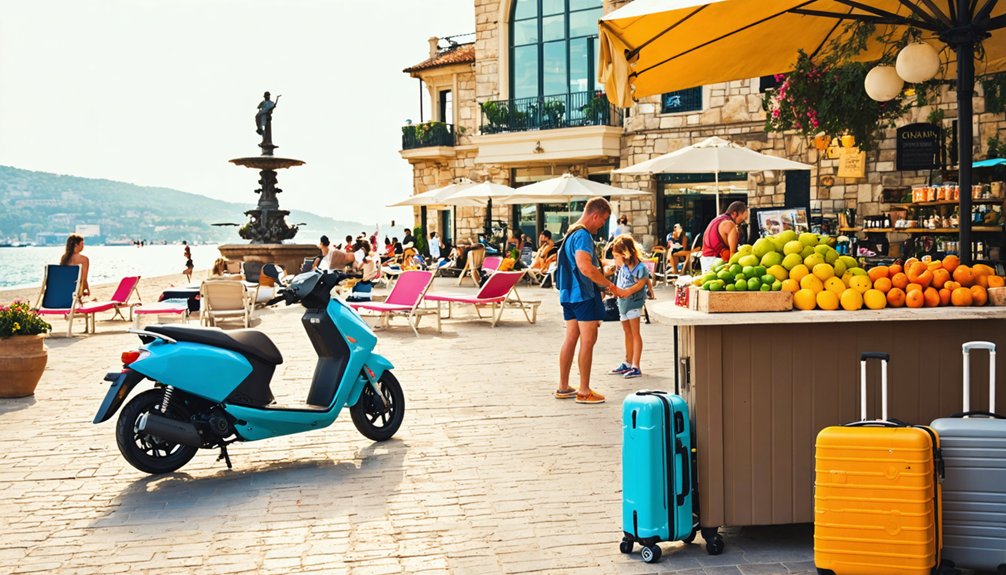

Flexible travel planning turns reservations into adaptable options, letting travelers monitor price alerts, use AI‑driven real‑time tweaks, and shift dates without penalties. Gen Z and millennials, who allocate roughly 29 % of income to travel, favor mobile‑first, impulse‑driven bookings, often within 30 days, and gravitate toward short, mood‑boosting getaways. Shoulder‑season travel and price‑alert tools cut costs 20‑40 % while AI recommendations boost confidence and conversion. Exploring this shift reveals deeper insights into emerging vacation habits.
Key Takeaways
- Travelers treat reservations as flexible options, driving a 9% rise in one‑night stays and boosting impulse bookings.
- AI‑powered price‑alert and itinerary‑adjustment tools enable real‑time changes, saving 1–3 hours per trip and increasing confidence.
- Mobile‑first platforms and AI recommendations influence 78% of bookings, with 94% trusting AI as much or more than other sources.
- Shoulder‑season travel and flexible departure windows cut flight and hotel costs 20‑57%, making spontaneous trips more affordable.
- Ultra‑short international mini‑journeys, especially among Gen‑Z, grow via visa simplifications and pop‑up upgrades, turning last‑minute options into memorable experiences.
Adopt a Flexible Travel Mindset
Embracing a flexible travel mindset means treating each reservation as an option rather than a fixed commitment.
Travelers now view tickets as controllable assets, a shift reflected in 41 % of business users who deliberately choose flexible fares and monitor updates constantly. This mindset is reinforced by daily rituals—checking price alerts, reviewing cancellation windows, and aligning travel dates with personal calendars.
Robust decision frameworks replace static itineraries, allowing rapid reallocation of time and budget when new information emerges. The industry’s move toward option‑based pricing and penalty‑free changes supports this evolution, turning spontaneity into a strategic advantage. Younger travelers allocate roughly 29 % of their income to travel, underscoring the regularity of travel in their lifestyles. Short‑term search spikes show that many travelers now prioritize spontaneous getaways over long‑term planning. Nature‑first adventures are driving a surge in demand for flexible bookings near national parks.
Use AI for Flexible Travel Itinerary Tweaks
Travelers who already treat reservations as flexible options now find AI to be the natural extension of that mindset, delivering real‑time adjustments without sacrificing control.
Recent surveys show 38 % of travelers have used AI for trip planning, and 63 % rely on it for most or every journey. AI tweaks enable instant itinerary nudges—shifting a museum visit to a later slot or swapping a dinner reservation when weather changes—while preserving the traveler’s sense of agency.
The technology saves 1–3 hours per trip for 78 % of users and boosts confidence for 38 %. Trust is high: 94 % trust AI recommendations as much or more than other sources, and 78 % book primarily based on those suggestions. This blend of speed, reliability, and community‑focused personalization reinforces the inclusive, adaptable travel culture emerging today. 33 % of respondents are likely to use AI tools for travel planning in 2026. AI adoption is driven more by habit than by distrust. 38 % of international travelers plan to take three or more trips.
Save Money With Shoulder‑Season Travel & Top Destinations
Beyond the peak‑season rush, shoulder‑season travel delivers measurable cost reductions while preserving the full travel experience; flights can be up to 57 % cheaper in late August compared with Christmas, and car rentals drop 30‑50 % relative to summer rates.
Travelers who target shoulder season find overall trip expenses 20‑40 % lower, with competitive rates on accommodations and tours.
Budget destinations such as Greece in March‑April or September‑October, Japan in autumn, and Iceland during early spring offer mild weather, fewer crowds, and authentic local interaction.
Off‑peak periods in the UK, Colombia, and Tanzania provide similar travel savings while keeping attractions fully operational. Local immersion benefits from reduced crowds and more authentic encounters. Milder temperatures make outdoor activities more comfortable. Shorter lines enhance the overall travel experience.
Plan 1‑2‑Day International Mini‑Journeys
Seize the momentum of Gen‑Z’s demand for ultra‑short international escapes, as data shows 1‑2‑day trips are set to become the norm for younger travelers in 2026.
Analysts note that Airbnb projects a surge in micro‑adventures, with city escapes to neighboring nations accounting for a growing share of bookings. Travelers leverage passport hacks—such as expedited visa‑on‑arrival programs—to reduce friction and maximize time on‑site.
Recent statistics reveal a 0.2 % rise in U.S. outbound air enplanements and a 1.5 % increase in departures, underscoring the appetite for swift cross‑border experiences. Outbound travel remains at 127.3 % of February 2019 levels, highlighting sustained high demand.
Popular corridors include Mexico‑U.S., Canada‑U.S., and short European hops like Berlin‑Amsterdam, where walkable districts and seamless transport align with Gen‑Z’s desire for belonging through shared, spontaneous moments.
Budgeting Tricks for Flexible, Spontaneous Trips
The surge in ultra‑short international mini‑journeys highlights a growing appetite for spontaneity, yet the real cost advantage lies in mastering flexible budgeting. Travelers who treat each trip as a series of micro‑savings can stretch limited funds while preserving the thrill of last‑minute decisions.
By leveraging flexible search tools—such as Google Flights “Explore”—they pinpoint the cheapest departure windows, often shifting summer travel to September to capture 30 % hotel and flight discounts. Weekday departures and avoiding Sunday returns further trim peak‑price spikes.
Award calendars reveal low‑mileage premium tickets when dates are fluid, and installment payment options provide security for spontaneous budgets. This disciplined yet adaptable approach fosters a sense of community among cost‑savvy explorers.
Gen Z & Millennial Habits That Enable Flexible Travel Planning
Embracing instant, mobile‑first tools, Gen Z and millennials reshape travel planning into a fluid, data‑driven process.
Over 80 % of Gen Z travelers research and book trips via smartphones, while 72 % trust AI to curate options, turning each search into a real‑time decision loop. Social discovery fuels this loop: 91 % turn to TikTok for inspiration, and 67 % engage daily with platforms that surface peer recommendations.
Spontaneity is quantified—61 % book impulsively, and 20 % wait for last‑minute deals, treating tickets as flexible commitments. Flexible itineraries dominate, with 83 % valuing adaptability and “gig‑tripping” anchoring plans around live events.
Budget‑conscious habits—average spend $1,500, luxury trimmed for experience—further reinforce a community‑centric, agile travel mindset.
Set Up Price‑Alert Tools for Flexible Travel Deals
Activate price‑alert tools early to lock in flexible travel deals, leveraging real‑time data that matches Gen Z and millennial habits for agile itinerary planning.
Travelers can configure Google Flights by entering criteria and toggling “Track prices,” then receive email fare alerts. Hopper’s AI‑driven predictions and color‑coded calendar hacks highlight cheapest dates, while push notifications keep users instantly informed.
Skyscanner’s “Drops” feature flags 20 %+ reductions, and Kayak offers customizable alerts for flights, hotels, and nearby airports. AirfareWatchdog delivers daily lowest‑fare emails for selected airports.
Turn Last‑Minute Options Into Unforgettable Experiences
Price‑alert tools lay the groundwork for spontaneous travel, but the real opportunity lies in converting those last‑minute deals into memorable experiences. Travelers now seize 36 % of spring‑break bookings made within 30 days, leveraging mobile‑first platforms that deliver flash sales and AI‑driven suggestions. By pairing pop‑up experiences with surprise upgrades—such as a complimentary city tour added to a budget hotel stay—operators transform brief, impulse‑driven trips into shared stories that reinforce community identity.
Data show one‑night stays rose 9 % while 65 % of guests treat these getaways as mood‑boosting treats, underscoring the psychological reward of immediacy. Brands that curate exclusive, time‑limited activities foster a sense of belonging, turning fleeting reservations into lasting, collective memories.
References
- https://www.ipx1031.com/americans-travel-report-2026/
- https://www.phocuswright.com/Travel-Research/Research-Updates/2026/Travel-Forward-Data-Insights-and-Trends-for-2026
- https://sunset.com/travel/travel-trends-2026
- https://thetravellingfool.com/the-most-important-2026-travel-trends-you-need-to-know/
- https://www.fcmtravel.com/en-us/resources/insights/corporate-travel-trends-2026
- https://thepointsguy.com/sites/trends-report/2026/
- https://www.deloitte.com/us/en/insights/industry/transportation/travel-hospitality-industry-outlook.html
- https://research.skift.com/reports/skift-global-travel-insights-whats-new-for-2026/
- https://fortune.com/2026/03/04/millennials-experience-economy-gen-z-reinventing-travel-as-lifestyle-fluid-cancelations-plans-change/
- https://www.kayak.com/c/wtf-report-2026/