

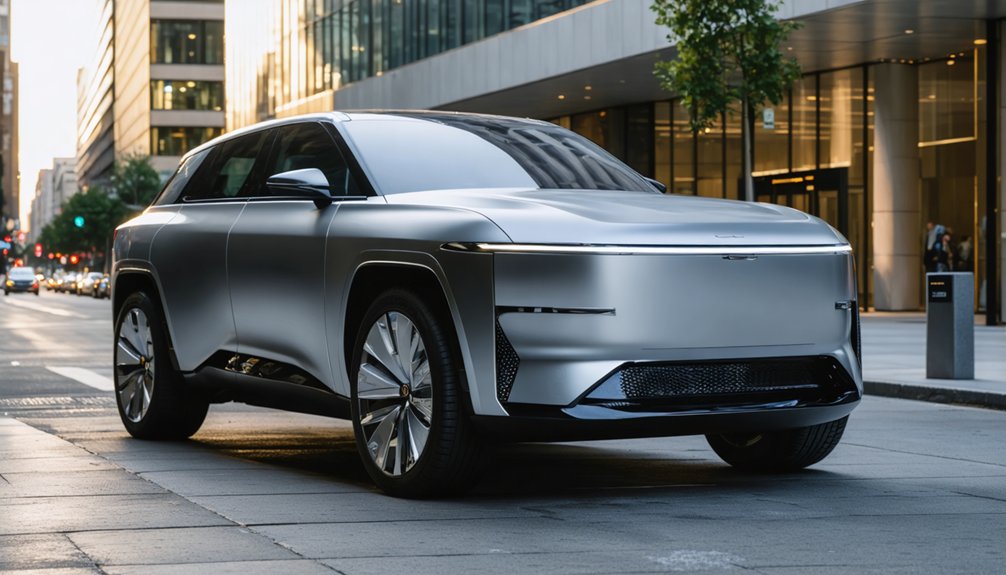

Hybrid powertrains dominate the 2026 SUV market, delivering 40 + MPG without plug‑in charging. Compact models such as the Kia Niro, Lexus UX 300h, and Toyota Corolla Cross offer the highest fuel economy, premium driver‑assist features, and versatile cargo space. Midsize options like the Toyota RAV4 Hybrid and Honda CR‑V Hybrid provide family‑friendly room and respectable MPG, while plug‑in hybrids such as the Ford Escape PHEV add electric‑only range for short trips. Detailed comparisons of EPA versus real‑world mileage, price‑efficiency trade‑offs, and usability features follow for informed decision‑making.
Key Takeaways
- Choose subcompact hybrids like Kia Niro (53 MPG) or Toyota Corolla Cross (42 MPG) for top fuel economy and urban practicality.
- Opt for midsize hybrids such as Toyota RAV4 Hybrid (47 MPG) for family cargo space, towing capacity, and reliable real‑world mileage.
- Consider plug‑in hybrids (e.g., RAV4 PHEV, Ford Escape PHEV) for up to 50 mi electric range plus strong combined MPG when charging isn’t convenient.
- Prioritize models with battery‑leasing programs to lower upfront costs and maintain resale value while keeping manufacturers responsible for battery health.
- Evaluate EPA versus real‑world MPG; models like Subaru Crosstrek manual often exceed EPA ratings, while others may fall short, affecting daily fuel expenses.
2026 Fuel‑Efficient SUV Market Overview
The 2026 SUV market is dominated by hybrid powertrains, which have become the primary driver of fuel‑efficiency gains across all segments. Modern compact and subcompact hybrids pair 1.6‑liter four‑cylinders with electric motors, delivering EPA‑rated 40‑plus MPG while eliminating plug‑in charging. Prices for these models range from $26,085 to $31,845, with premium features such as blind‑spot monitoring and LED headlights reinforcing a sense of community among eco‑conscious owners. Battery leasing programs lower upfront costs, making ownership more accessible and preserving resale values as manufacturers retain responsibility for battery health. Consequently, resale values remain robust, reflecting the long‑term cost benefits of reduced fuel consumption and the perceived reliability of full‑hybrid systems. The Kia Niro leads the segment with a combined 53 MPG rating, underscoring its position as the most fuel‑efficient gasoline‑powered SUV. 4.8 expert rating highlights the Hyundai Kona’s strong market acceptance and efficiency. Hybrid powertrains are now the primary driver of fuel‑efficiency gains.
Top Subcompact Fuel‑Efficient Hybrids: Niro, UX 300h, Corolla Cross
Hybrid dominance in the 2026 SUV market narrows the focus to subcompact models that balance fuel economy with practicality, highlighting the Kia Niro, Toyota Corolla Cross, and Lexus UX 300h as the leading choices.
The Niro’s 1.6‑L hybrid delivers 53 MPG city, a spacious 102 ft³ cabin, and six‑speed automation that supports urban maneuverability while preserving battery longevity. Its AWD option adds traction for inclement weather. Ground clearance is 6.3 in, aiding confidence on uneven surfaces. It also boasts a C/D Rating 8.5/10 that underscores its strong value proposition.
Corolla Cross offers a stronger 2.0‑L powertrain, 42 MPG combined, and a reputation for reliability that bolsters resale value and brand perception among cost‑conscious drivers.
The UX 300h, positioned as a luxury entry, combines premium interior finishes with efficient performance, reinforcing Lexus’s upscale brand perception and delivering respectable battery life for city commuters.
Together, these subcompact hybrids meet the practical and emotional needs of modern urban owners.
Comparing EPA MPG vs. Real‑World Fuel Economy
Why do EPA mileage figures often diverge from what drivers actually experience on the road? The EPA uses controlled city and highway cycles that under‑represent idling, cap highway speed at 60 mph, and assume pristine vehicle condition. Real‑world driving frequently exceeds those speeds, features longer traffic stops, and involves varied driver behavior such as aggressive acceleration or heavy loads. This EPA variability creates a gap between rated and observed fuel economy.
For example, the Subaru Crosstrek manual delivers 30.5 mpg combined versus an EPA 25 mpg rating, while the Honda HR‑V exceeds highway estimates with 40.8 mpg. Conversely, the Range Rover Velar falls short, posting 21.4 mpg against an EPA 23 mpg. Hybrids like the 2024 Toyota RAV4 Hybrid achieve 37.9 mpg in a 250‑mile test, illustrating how real‑world conditions and driver behavior shape true efficiency. The Chevrolet Equinox diesel model shows a significant improvement with real‑world combined MPG 38.1 versus EPA 32. The overall fleet fuel economy improved in 2024, driven by a greater BEV/PHEV share that raised average mpg by 1.7.
Best Midsize Fuel‑Efficient Hybrids for Families
Three standout midsize hybrids dominate the family market in 2026: the Toyota RAV4 Hybrid, Honda CR‑V Hybrid, and Lexus NX Hybrid.
The RAV4 Hybrid leads with 47 MPG city and a Consumer Reports reliability score of 77, delivering ample family cargo space and a flexible rear‑seat layout. It also offers up to 3,500 lb towing capacity for occasional hauling. The RAV4 Hybrid’s EPA‑estimated 41–45 mpg combined fuel economy makes it one of the most efficient options in its class.
Honda’s CR‑V Hybrid follows at 43 MPG city, 36 MPG highway, offering 204 hp, wireless charging, and a 9‑inch touchscreen that enhance seating versatility for growing households.
Lexus NX Hybrid balances premium comfort with 41 MPG city, heated front seats, NuLuxe upholstery, and the Safety System+ 3.0, providing a refined yet practical choice for families needing reliable cargo capacity and adaptable seating.
Plug‑In Fuel‑Efficient Hybrid SUVS With Real‑World Electric Range
Amid growing demand for electric‑first capability, the 2026 Toyota RAV4 Plug‑in Hybrid sets a new mainstream benchmark with up to 52 miles of all‑electric range, 324 hp, and a combined‑mode efficiency of 41 mpg.
Competing models such as the 2025 Land Rover Range Rover Sport P550e (53 mi, rapid DC), 2026 Mercedes‑Benz GLC 350e (50 mi), and 2026 BMW X5 xDrive50e (38 mi, 11 kW AC) expand the premium segment, while Hyundai Tucson, Kia Sportage, and Kia Niro deliver affordable options with 32‑34 mi electric range.
Real‑world efficiency remains strong, with RAV4 achieving 41 mpg hybrid, Tucson 35 mpg, and Mercedes‑Benz 25 mpg.
Owners are urged to follow charging etiquette—avoid deep‑discharge cycles and use Level 2 chargers—to preserve battery longevity and sustain range consistency across daily commutes.
Price‑Efficiency Trade‑offs: What You Get for Your Dollar
The surge in plug‑in hybrids underscores how electric range alone does not dictate overall value, prompting a closer look at how price and fuel economy intersect across the SUV market.
When evaluating price‑efficiency trade‑offs, buyers compare MPG‑per‑dollar ratios, trim levels, and maintenance costs. The 2026 Chevrolet Trailblazer delivers 31 MPG at $23,100 (0.00134 MPG/$), while the Toyota Corolla Cross Hybrid offers 43 MPG for $29,395 (0.00146 MPG/$) but starts at a higher trim and may incur premium service fees. Mid‑price hybrids such as the Ford Escape Hybrid (0.00129 MPG/$) balance fuel savings with modest maintenance, whereas budget non‑hybrids like the Nissan Rogue (0.00113 MPG/$) provide lower upfront costs but higher long‑term fuel expense. Selecting the best SUV hinges on aligning budget, desired trim amenities, and projected upkeep.
Efficiency‑Focused Usability Features: Tech, Cargo, Comfort
Balancing technology, cargo capacity, and comfort is essential for efficiency‑focused SUVs. The Kia Niro Hybrid showcases tech cargo integration with ten driver‑assist features and a hatchback‑like cargo volume, while its 1.6‑liter hybrid system sustains 53 mpg.
Toyota Corolla Cross Hybrid adds front and rear parking assist, blind‑spot monitoring, and LED headlights, delivering 42‑43 mpg and practical cargo for daily errands.
Ford Escape’s 13.2‑inch LCD touchscreen and Co‑Pilot360 Assist enhance comfort usability, and its plug‑in hybrid option expands range without sacrificing cargo space.
Lexus NX 350h offers an upscale cabin and tech‑savvy elements, reinforcing comfort usability for premium buyers.
Subaru Crosstrek Hybrid pairs comfortable seats with respectable cargo, and Nissan Rogue blends fuel economy with a digital dashboard, rounding out a cohesive set of efficiency‑focused usability features.
Recommendation Matrix: Which Efficient SUV Fits Your Daily Needs
Considering daily driving patterns, budget, and cargo needs, the matrix aligns each efficient SUV category with the most suitable model: compact hybrids such as the 2026 Ford Escape FWD HEV and PHEV dominate commuters seeking flexibility and high MPGe; subcompact choices like the 2026 Toyota Corolla Cross and Hyundai Kona cater to urban drivers prioritizing affordability and maneuverability; premium hybrids—including the Kia Niro and Lexus UX 300h—serve buyers who value top‑tier fuel economy without sacrificing luxury; and electric or plug‑in options, especially the Ford Mustang Mach‑E and Escape PHEV, address zero‑emission preferences for longer ranges.
The guide quantifies ownership costs, highlighting lower fuel expenses and reduced maintenance for hybrids and EVs. It also stresses charging etiquette for shared stations, ensuring community harmony while maximizing vehicle uptime.
References
- https://www.edmunds.com/car-buying/best-gas-saving-hybrid-suvs.html
- https://www.kbb.com/suv/most-fuel-efficient-suvs/
- https://www.caranddriver.com/rankings/best-suvs/gas-mileage
- https://www.autoblog.com/features/best-gas-mileage-suv
- https://www.cars.com/research/suv/best-mpg/
- https://www.youtube.com/shorts/0mKYQ8Eg4jE
- https://www.slashgear.com/2105784/best-gas-mileage-suv-in-2026/
- https://www.vernlauresautocenter.com/blog/most-fuel-efficient-suv
- https://www.truecar.com/compare/kia-niro-vs-toyota-corolla-cross/
- https://www.pocket-lint.com/toyota-corolla-cross-vs-kia-niro/